
What Actually Goes Into a Home Survey Cost
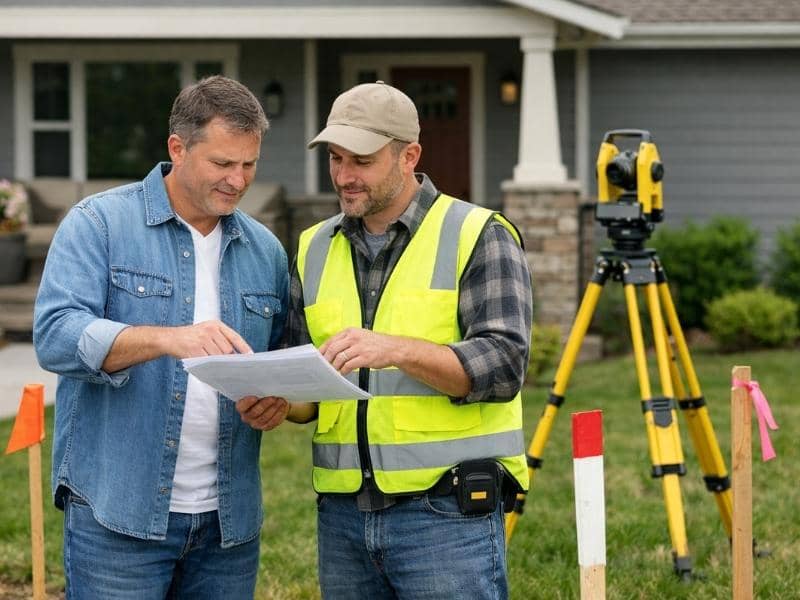
You are buying a home and someone on your team, whether that is your lender, your real estate agent, or your title company, mentions that you need a survey. Your first question is probably how much is this going to cost me.
That is a fair question. But most people stop there. They get a number, accept it, and move on without really understanding what they are paying for or whether they are getting everything they need.
This article is about what actually makes up a home survey cost, what questions you should be asking before you sign anything, and how to make sure you are not leaving anything important out.
What Is a House Survey
Before we talk about cost, it helps to be clear on what a house survey actually is. A house survey in this context is a professional measurement and documentation of a residential property. A licensed land surveyor researches your property records, visits the site, locates the boundary lines, and produces a stamped legal document showing exactly what you own and where it sits.
It is not the same as a home inspection, which looks at the physical condition of the structure. A house survey is about the land itself, the boundaries, and how the home sits on that land.
What You Are Actually Paying For
When you get a quote for a home survey, that number covers several different things. Most people only think about the time the surveyor spends walking around the property. But that is just one part of a bigger picture.
Office Research and Record Pulling
Before any fieldwork happens, the surveyor spends time at a desk. They pull your deed, review the legal description of the property, look at historical surveys, and check county records. For some properties this takes a couple of hours. For others with complicated histories it can take much longer.
This research phase is what separates a thorough survey from a rushed one. Skipping or shortcutting this step is one of the most common ways that cheap surveys cause expensive problems later.
Travel and Field Time
Once the research is done, the surveyor or their crew heads out to your property. They use professional grade equipment to locate boundary markers, measure the property lines, and establish the corners of your land. How long this takes depends on the size and complexity of the property and how easy it is to access.
Equipment and Technology
Modern surveying relies on specialized equipment including GPS receivers, total stations, and in some cases drone or LiDAR technology. That equipment is expensive to buy, maintain, and operate. The cost of using it is built into your survey quote even if no one spells it out for you.
Document Preparation and Stamping
After the fieldwork is done, the surveyor goes back to the office to draft the final survey document. This includes drawing the plat, recording all measurements, noting any relevant features or encroachments, and signing and stamping the document to make it legally valid. That process takes time and expertise.
Liability and Insurance
Licensed surveyors carry professional liability insurance. That coverage protects you if an error in the survey causes a financial loss down the road. Part of what you pay for in a home survey cost is that protection.
Factors That Change the Price
Not every home survey costs the same. Here are the things that push the price up or down.
Property size. Larger lots take more time to survey. A small residential lot in town will cost less than a sprawling rural property.
Property history. If your home has changed hands many times or has an unclear ownership history, the research phase takes longer and costs more.
Existing markers. If the corners of the property are already marked from a previous survey, the job moves faster. If markers are missing or have been disturbed, the surveyor has to locate them from scratch.
Terrain and vegetation. A flat open lot is easier to work with than a heavily wooded or steeply sloped property. Difficult terrain takes more time and effort.
Type of survey needed. A simple boundary survey costs less than a more detailed survey like an ALTA survey. Make sure you know which type your lender or title company actually requires before you order one.
Questions Most People Forget to Ask
Here is where most homebuyers leave money on the table or end up surprised later. Before you agree to any home survey cost, ask these questions.
What type of survey are you quoting me for? Make sure the survey type matches what your lender or title company actually needs. Getting the wrong type means paying twice.
Does the quote include placing physical markers at the corners? Some quotes include this and some do not. If you need the corners physically marked for a fence or construction project, confirm it is part of the scope.
Will I receive a stamped final document? The survey is only legally valid if it is signed and stamped by a licensed surveyor. Always confirm this is included.
How long will the process take? If you have a closing date, you need to know the surveyor can deliver on time.
Are there any situations that could change the final price? Sometimes unexpected issues come up during research or fieldwork. Ask upfront whether the quote is fixed or whether it could change.
Average Home Survey Cost
For a typical residential property, a home survey generally costs between $400 and $1,000. Properties that are larger, older, or more complex can run higher, sometimes between $1,500 and $3,000 or more depending on what the job involves.
These numbers cover a standard boundary survey for a residential property. If your lender requires something more detailed like an ALTA survey, expect to pay more. ALTA surveys are more comprehensive and take more time to complete.
Is It Ever Okay to Skip the Survey
Technically yes. In some real estate transactions a survey is not legally required. But just because you can skip it does not mean you should.
Without a survey you have no legal documentation of where your property lines actually are. You are trusting that everything is where it is supposed to be based on old records and assumptions. That works out fine sometimes. Other times it leads to disputes, encroachments, permit problems, and legal fees that cost far more than the survey would have.
For most homebuyers, skipping the survey is a risk that is simply not worth taking. The cost of a home survey is small compared to what it protects you from.