Your Lender Wants an Elevation Certificate. Here Is What That Means
You are buying a home or refinancing. Everything is going smoothly. Then your lender mentions something called an elevation certificate. You have never heard of it. Now you are worried about your closing date and what it might cost you.
Do not stress. It is simpler than it sounds. Here is what an elevation certificate is, why your lender needs one, and what happens after you get it.
What Is an Elevation Certificate
An elevation certificate is an official paper that shows how high your home sits compared to the flood level in your area.
FEMA, which stands for the Federal Emergency Management Agency, sets a flood level for every area in the country. That level is called the base flood elevation. It is the height that floodwater is expected to reach during a major flood event.
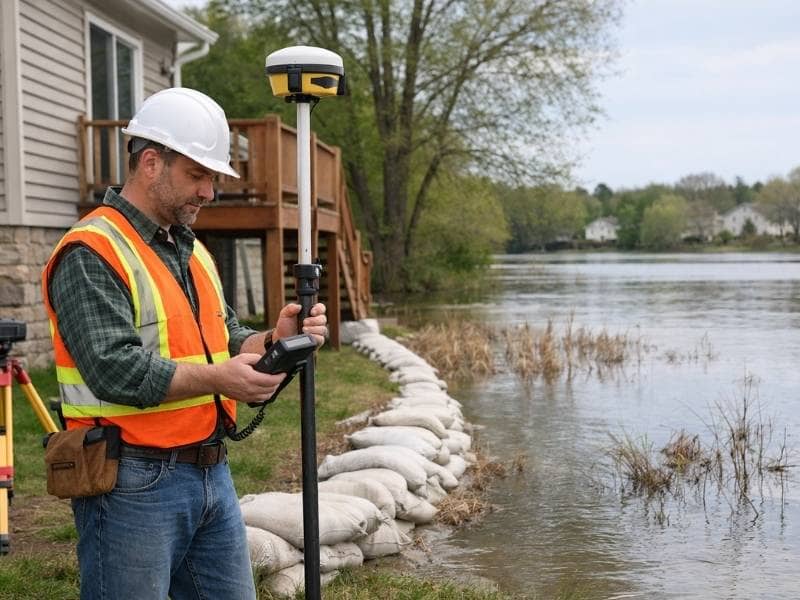
A licensed land surveyor visits your home, measures how high it sits, and fills out an official FEMA form. That form is your elevation certificate. It is signed and stamped by the surveyor, which makes it a legal document.
Think of it this way. The elevation certificate is proof of exactly how high your home sits above or below the flood level.
Why Your Lender Is Asking for One
If your home is near a flood zone, your lender is required by federal law to make sure you have flood insurance before they approve your loan.
To figure out how much your flood insurance should cost, the insurance company needs to know how high your home sits. Without an elevation certificate, they have to guess. And when they guess, they almost always go high, which means your flood insurance premium ends up higher than it needs to be.
An elevation certificate gives them the real numbers. That usually means a lower flood insurance rate for you.
So your lender is not trying to make things harder. They are following the rules, and getting this done can actually save you money every year.
How to Know If Your Home Is in a Flood Zone
FEMA makes flood maps for communities all across the country, including Dadeville, Alabama and the rest of Tallapoosa County. These maps divide land into different zones based on flood risk.
If your home is in Zone A or Zone AE, it is considered high risk. That is usually when the elevation certificate requirement kicks in. If your home is in Zone X, the risk is lower and flood insurance is usually not required.
You can search for your home on FEMA’s flood map website to get a general idea of your zone. But maps are not always exact for every single property. A licensed land surveyor can give you a more accurate answer based on real measurements of your land.
Who Can Complete an Elevation Certificate
Only three types of professionals can fill out and sign an elevation certificate. A licensed land surveyor, a licensed engineer, or a licensed architect. For most homeowners, a licensed land surveyor is the person you will call.
The surveyor comes to your home and takes measurements. They measure the lowest floor of your house, the ground level around it, and a few other points that FEMA requires. Then they fill out the official form, sign it, and stamp it.
Make sure you hire someone who has done elevation certificates before. A mistake on the form can slow down your closing or mess up your flood insurance rate.
How Long Does It Take
In the Dadeville, Alabama area, the whole process usually takes one to two weeks. The actual visit to your home only takes a few hours. Most of the time is spent on scheduling and putting together the final document.
If you have a closing date coming up, do not wait. Order the elevation certificate as soon as you can. Last minute requests can be hard to fit in and may push back your timeline.
How Much Does It Cost
Most homeowners pay between $300 and $800 for an elevation certificate. The price depends on where your home is, how complex the job is, and which surveyor you hire.
It might feel like one more expense at an already expensive time. But here is the thing. If your home sits above the flood level, your elevation certificate could lower your flood insurance by hundreds of dollars a year. Over time that adds up to way more than what you paid for the certificate.
What Happens After You Get It
Once you have the elevation certificate, you give it to your lender and your flood insurance company. The insurance company uses the information to set your flood insurance rate based on your actual home, not a guess.
If your home is well above the flood level, your premium could drop a lot. In some cases, you may even be able to apply to have the flood insurance requirement removed completely. That process is called a Letter of Map Amendment.
If your home is at or below the flood level, your lender will require flood insurance. But at least now the rate is based on real information, not an estimate.
Either way, you know exactly where you stand. That is always better than guessing.
Can You Use an Old Elevation Certificate
Sometimes yes. If the property already has an elevation certificate and it was done after the last time FEMA updated the flood maps for your area, your lender or insurance company may accept it.
Ask your lender or insurance agent first before you pay for a new one. If the maps have changed or if your home has been changed since the last certificate was done, you will likely need a new one.
Frequently Asked Questions
Do I need an elevation certificate if my home is not in a flood zone?
Usually not. They are mostly required for homes in high risk flood zones. But some lenders ask for one even if your home is near the edge of a flood zone, just to be safe.
Can I get flood insurance without one?
Yes, but your premium will be based on a guess rather than real measurements. That almost always means paying more than you need to.
What is the difference between a flood zone determination and an elevation certificate?
A flood zone determination just tells you which flood zone your property is in. An elevation certificate goes further and shows exactly how high your home sits compared to the flood level. They are not the same thing.
How often do I need to get a new one?
There is no set schedule. But if FEMA updates the flood maps for your area or if you make big changes to your home, you may need a new one.
Will it lower my flood insurance?
It very likely will, especially if your home sits above the base flood elevation. Most homeowners who get an elevation certificate end up paying less for flood insurance than they did before.